IIT Bombay MSc admissions are ongoing via IIT JAM, eligible candidates can apply via @joaps.iitg.ac.in before April 25, 2023. IIT Bombay M.Tech/ MTech PhD/ Phd/ MS (Research) registration are over, list of candidates selected for written/interview will be displayed on April 27. For IIT Bombay MDP (Master in Development Practice) applicants must apply by May 2, 2023. IIT Bombay MDes application process is over shortlist is expected to be released by April 21, 2023. IIT Bombay accepts JEE Advanced for admission to its flagship BTech program. JEE Advanced 2023 registration will begin on April 30, 2023.
![IIT Bombay - Indian Institute of Technology - [IITB]](https://staticstage.collegedunia.com/public/college_data/images/logos/1431953162ccgsygdygw.jpg?tr=h-94,w-94,c-force)
this is header title
Mumbai, Maharashtra
Autonomous UniversityNAAC Grade A+ | Scale 5.0


Content Curator | Updated On - Jun 25, 2026
IIT Bombay Quick Updates
The JEE Advanced 2026 exam dates have been officially announced on the official website, jeeadv.ac.in. As per the notification, the JEE (Advanced) 2026 examination will be conducted on Sunday, May 17, 2026. This year, the exam will be organised by IIT Roorkee, following the rotational policy among the seven IITs.
download pdf Download PDF View PDF Check Solutions View Solution- The JEE Advanced 2026 application process is expected to begin in April 2026, after the declaration of the JEE Main 2026 results. The examination is scheduled to be held in May 2026.
- To be eligible for JEE Advanced 2026, candidates must rank among the top 2,50,000 scorers in JEE Main 2026. Aspirants are allowed a maximum of two consecutive attempts at the JEE Advanced exam.
- The JEE Advanced 2026 exam pattern will consist of two compulsory papers conducted in computer-based test (CBT) mode. Both papers will assess candidates in Physics, Chemistry, and Mathematics, with questions in the form of MCQs, multiple-select questions (MSQs), and numerical-type questions.
What is the JEE Advanced 2026 Exam?
JEE Advanced Exam is a national-level entrance exam conducted for admission to 23 IITs for B.Tech/B.E and B.Arch programs. It is conducted for the top 2.5 lakh candidates who qualify for the JEE Main exam. JEE Advanced is conducted by one of the seven zonal IITs- Roorkee, Kharagpur Delhi, Kanpur, Bombay, Madras, and Guwahati on a rotational basis under the guidance of the Joint Admission Board (JAB). Check JEE Advanced Daily Live Updates to be up to date about the exam.
Table of Contents
- JEE Advanced 2026: Highlights
- JEE Advanced 2026: Important Dates
- JEE Advanced Eligibility Criteria 2026
- JEE Advanced 2026: Courses Offered
- JEE Advanced 2026 Application Form
5.1 JEE Advanced 2026 Exam Center
5.2 JEE Advanced 2026 Application Fee
- JEE Advanced 2026 Statistics
6.1 JEE Advanced: Gender-Wise Stats
- JEE Advanced 2026 Admission Process
7.1 JEE Advanced 2026 Reservation
- JEE Advanced 2026 Exam Pattern
- JEE Advanced 2026 Syllabus
- JEE Advanced 2026 Preparation Tips
10.1 Best Books for JEE Advanced 2026
10.2 JEE Advanced Question Paper PDF
10.3 JEE Advanced Paper Analysis
- JEE Advanced 2026 Admit Card
- JEE Advanced 2026 Answer Key
- JEE Advanced 2026 Result
- JEE Advanced 2026 Rank List
- JEE Advanced 2026: Marks vs Rank
15.1 JEE Advanced Marks vs Rank Analysis
- JEE Advanced 2026: Cutoff
- FAQs
JEE Advanced 2026: Highlights
| Exam Particulars | Exam Details |
|---|---|
| Exam Name | Joint Entrance Exam Advanced (JEE Advanced 2026) |
| Conducting Body | IIT Kanpur |
| Exam Level | National |
| Exam Frequency | Once a year |
| Mode of Exam | Computer-based test |
| Number of candidates registered | 186,584 as of 2026 |
| Number of candidates appeared | 180,200 as of 2026 |
| Number of candidates passed | 48,248 as of 2026 |
| Total seats in IITs | 17,385 as of 2026 |
| Exam Fees |
|
| Exam Duration |
|
| No. of Papers | Two papers |
| Language/Medium of Exam | English / Hindi |
| Colleges Accepting Exam Score | All IITs and other institutes |
| No. of Test Cities | 232 cities as of 2026 |
| Official Website | jeeadv.ac.in |
| Contact Details |
|
JEE Advanced 2026: Important Dates
Check the table given below to get details about the important JEE Advanced exam date.
| Expected Date (2026) | Event |
|---|---|
| December 2025 | Release of Notification & Brochure |
| April 2026 | Start of Registration |
| Early May 2026 | Last Date of Registration |
| May 17, 2026 | JEE Advanced 2026 Exam Date |
| Last week of May 2026 | Release of Provisional Answer Key |
| June 2026 | Declaration of Results |
JEE Advanced Eligibility Criteria 2026
The JEE Advanced Eligibility Criteria are mentioned below:
JEE Advanced Eligibility Criteria For Indian Nationals & OCI/PIO Cardholders (Issued Before March 4, 2021)
- Performance in JEE Main 2026: Candidates must rank among the top 2,50,000 qualifiers in the B.E./B.Tech paper of JEE (Main) 2026.
The top candidates are shortlisted across categories as follows:
| Category | Percentage of Candidates Shortlisted |
|---|---|
| GEN-EWS | 10% |
| OBC-NCL | 27% |
| SC | 15% |
| ST | 7.50% |
| OPEN | 40.50% |
| PwD | 5% (horizontal reservation within each category) |
Specific category-wise distributions apply:
| Category | Top Candidates |
|---|---|
| OPEN | 96,187 |
| OPEN-PwD | 5,063 |
| GEN-EWS | 23,750 |
| GEN-EWS-PwD | 1,250 |
| OBC-NCL | 64,125 |
| OBC-NCL-PwD | 3,375 |
| SC | 35,625 |
| SC-PwD | 1,875 |
| ST | 17,812 |
| ST-PwD | 938 |
Note: OCI/PIO cardholders issued before March 4, 2021, are eligible only under the OPEN and OPEN-PwD categories and do not qualify for other reservations.
- Age Limit: Candidates must be born on or after October 1, 2000. SC, ST, and PwD candidates are eligible for a five-year age relaxation (October 1, 1995).
- Number of Attempts: Candidates can attempt JEE (Advanced) a maximum of two times in two consecutive years.
- Class XII Appearance: Candidates must have appeared for their Class XII (or equivalent) exam with Physics, Chemistry, and Mathematics in 2023, 2026, or 2026. Exceptions apply for withheld results based on the academic year of 2021-22.
- Previous Admission in IITs: Candidates previously admitted to any IIT are not eligible, except those who joined preparatory courses in 2026 or who withdrew before the final seat allotment.
JEE Advanced Eligibility for Foreign Nationals and OCI/PIO Cardholders (Cards Issued On or After March 4, 2021)
- Age Limit: Candidates must be born on or after October 1, 2000. In countries requiring mandatory military service, age relaxation applies upon providing proper documentation.
- Number of Attempts: A maximum of two attempts is allowed within two consecutive years.
- Class XII Appearance: Candidates must have completed their Class XII (or equivalent) with Physics, Chemistry, and Mathematics in 2023, 2026, or 2026.
- Previous Admission in IITs: Candidates previously admitted to any IIT are generally ineligible, with exceptions for those in preparatory courses or who withdrew before the final round of seat allotment.
Points To Remember
- OCI/PIO Eligibility: OCI/PIO cardholders with cards issued before March 4, 2021, are considered Indian nationals and qualify under the OPEN and OPEN-PwD categories only. They do not benefit from reserved categories.
- Identity Proof: All candidates must provide identity documentation, such as a citizenship certificate, passport, or OCI/PIO card.
- Foreign Nationals’ Seats: Foreign nationals have access to supernumerary seats, capped at 10% per course and not subject to reservation quotas.
- Nationality: All Indian citizens of India are eligible to sit for the JEE Advanced exam. Under 10% of the SNQ, international candidates are eligible.
JEE Advanced 2026: Courses Offered
The courses offered at the IITs through the JEE Advanced Exam have been tabulated below:
| Course | Duration |
|---|---|
| B.Tech (Bachelor of Technology) | 4 years |
| B.S. (Bachelor of Science) | 4 years |
| B.Arch (Bachelor of Architecture) | 5 years |
| Dual Degree B.Tech- M.Tech (Dual Degree Bachelor of Technology and Master of Technology) | 5 years |
| Dual Degree B.S-M.S (Dual Degree Bachelor of Science and Master of Science) | 5 years |
| Integrated M.Tech (Integrated Master of Technology) | 5 years |
| Integrated M.Sc (Integrated Master of Science) | 5 years |
JEE Advanced AAT 2026
Candidates who wish to join the BArch (Architecture) program in the IITs, will have to pass the JEE Advanced Architecture Aptitude Test (AAT). Only those candidates who have qualified for JEE Advanced 2026 will be eligible to register for JEE Advanced AAT 2026. No separate admit card will be issued for this exam, candidates can sit for the AAT 2026 exam by providing the JEE Advanced 2026 Admit Card.
JEE Advanced 2026 Application Form
Candidates are required to fill out the JEE Advanced 2026 Application Form online. To fill out the Application Form, visit the official website and log in using your JEE Main Roll Number and password. Now, fill in the required personal and academic information, preferred language, exam centre preference, etc. and upload the required documents.
Scanned Documents to be uploaded in the online application form:
- Class X certificate if the date of birth is mentioned in it or the birth certificate.
- Class XII (or equivalent examination) certificate
- Class XII (or equivalent examination) certificate
- If the candidate’s name is not the same as in the Class X certificate, a gazette notification showing the change of name.
- Caste certificates as needed.
JEE Advanced 2026 Exam Center
JEE Advanced Exam Centres are divided under the 7 Zonal IITs. The cities are decided by the exam conducting authorities and are listed in the official notification. Candidates can give choice of 8 cities from the provided list. The JEE Advanced Exam Centre will be allotted by the authorities from the preferences given by the students and will be final. No request for changes will be entertained by the authorities.
JEE Advanced 2026 Application fee
The JEE Advanced application fee is as follows:
| Registration fee for Examination Centres in India | ||
|---|---|---|
| Indian Nationals | Female Candidates (all categories) | ₹ 1600 |
| SC, ST, and PwD Candidates | ₹ 1600 | |
| All Other Candidates | ₹ 3200 | |
| OCI/PIO cardholders(where the OCI/PIO card was issued before 04-03-2021) | Female Candidates (GEN and GEN-PwD) | ₹ 1600 |
| OPEN (GEN-PwD) | ₹ 1600 | |
| OPEN (GEN) | ₹ 3200 | |
| Foreign Nationals &OCI/PIO cardholders(where the OCI/PIO card was issued on or after 04-03-2021) | Candidates Residing in SAARC Countries | USD 100 |
| Candidates Residing in Non-SAARC Countries | USD 200 | |
| Registration Fee for Examination Centres in Foreign Countries | ||
| Indian Nationals and OCI/PIO cardholders(where the OCI/PIO card was issued before 04-03-2021) | All | USD 100 |
| Foreign Nationals &OCI/PIO cardholders(where the OCI/PIO card was issued on or after 04-03-2021) | Candidates Residing in SAARC Countries | USD 100 |
| Candidates Residing in Non-SAARC Countries | USD 200 | |
JEE Advanced 2026 Statistics
Refer to the tables below for JEE Advanced 2026 Statistics like pass percentage, total number of candidates, and more:
| Year | Number of candidates registered | Number of candidates appeared | Number of qualified candidates | Number of candidates allotted seats in IITs |
|---|---|---|---|---|
| 2026 | 186584 | 180200 | 48248 | TBA |
| 2023 | 189487 | 180372 | 43769 | 17340 |
| 2022 | 160038 | 155538 | 40712 | 16635 |
| 2021 | 151193 | 141699 | 41862 | 16296 |
| 2020 | 160838 | 150838 | 43204 | 16061 |
| 2019 | 174432 | 161319 | 38705 | 13604 |
| 2018 | 165656 | 155158 | 31988 | 12069 |
| 2017 | 171814 | 159540 | 51040 | - |
| 2016 | 155948 | 147678 | 36566 | 10576 |
JEE Advanced: Gender-Wise Stats
| Gender | Registered | Appeared in Both Papers | Qualified |
|---|---|---|---|
| Male | 143637 | 139180 | 40284 |
| Female | 42947 | 41020 | 7964 |
| Total | 186584 | 180200 | 48248 |
JEE Advanced Statistics
| Nationality | Registered | Appeared in Both Papers | Qualified |
|---|---|---|---|
| Indian | 186067 | 179711 | 48062 |
| OCT | 348 | 331 | 179 |
| Foreign | 169 | 158 | 7 |
JEE Advanced 2026 Admission Process
The step-wise JEE Advanced Admission Process has been discussed below:
- Candidates need to clear the JEE Main 2026 exam and secure a place within the top 250000 ranks.
- The next step is to fill out the JEE Advanced Application Form and pay the required registration fee.
- Candidates who complete their registration will be able to download the JEE Advanced Admit Card 2026 from the official website, once released.
- Appear for the JEE Advanced 2026 exam at the allotted exam centre.
- Check the JEE Advanced Result 2026 from the official website once released.
- Register for JoSAA Counselling 2026 for seat allotment in IITs.
JEE Advanced 2026 Reservation
Reservation of seats in JEE Advanced 2026 is provided under the rules of the Government of India. The table below shows the category-wise JEE Advanced Reservation:
| Category | Reservation Percentage |
|---|---|
| Gen-EWS | 10% |
| OBC-NCL | 27% |
| SC | 15% |
| ST | 7.5% |
| PwD | 5% |
JEE Advanced 2026 Exam Pattern
JEE Advanced exam is a computer-based test, consisting of two papers- Paper 1 and Paper 2. Candidates must compulsorily appear in both papers. Each paper is 3 hours long and has 3 Sections - Physics, Chemistry and Mathematics. The number of questions and marking scheme varies every year. The medium of examination is both in Hindi and English. However, in case of a conflict in any question, the English version shall prevail.
Candidates can find the detailed JEE Advanced 2026 Exam Pattern in the table below:
| Particulars | Details |
|---|---|
| Mode of Exam | Online (Computer-based Test) |
| Number of papers | Paper 1 & paper 2 (both are mandatory) |
| Duration | 3 hours for each paper (4 hours for PwD candidates) |
| Subjects | Mathematics, Physics, Chemistry |
| Type of Questions | MCQs, numeric value-based answer questions, multiple select questions, etc. |
| Number of Questions | Varies every year |
| Marking Scheme | Varies every year. Expect numerical value answer questions, there are negative markings for every wrong answer. |
JEE Advanced 2026 Syllabus
JEE Advanced 2026 Syllabus is based on Class 11 and 12 syllabi. The table below mentions the JEE Advanced Syllabus 2026 for all three subjects:
| Subject | Topics |
|---|---|
| Physics | Mechanics, Thermal Physics, Electricity and Magnetism, Electromagnetic Waves, Optics, Modern Physics |
| Chemistry | Gaseous and Liquid States, Atomic Structure, Chemical Bonding and Molecular Structure, Chemical Thermodynamics, Chemical equilibrium¸ Electrochemistry¸ Chemical kinetics, Solid-state, Solutions, Surface Chemistry, Nuclear Chemistry, Transition elements, Ores and minerals¸ Extractive metallurgy, Preparation, properties and reactions of alkanes, alkenes & alkynes, Reactions of benzene, Phenols, Carbohydrates, Amino acids and peptides |
| Mathematics | Sets, Relation and Function, Probability and Statistics, Matrices, Algebra, Trigonometry, Analytical Geometry, Differential Calculus, Integral Calculus, Vectors. |
JEE Advanced 2026 Preparation Tips
JEE Advanced 2026 syllabus is based on the syllabus of Classes 11 and 12. Candidates must cover the syllabus of both classes fully so that they have a strong foundation of basics. Candidates can find below some of the JEE Advanced Preparation Tips to ace the exam:
- Understand the JEE Advanced syllabus and exam pattern clearly. A clear understanding will help to strategize a good study plan.
- Make a proper timetable to cover all the topics in a balanced manner.
- Choose the study material very carefully and refer to the same books multiple times. This will strengthen your concepts and help in revising from the same source.
- Analyze and practice the JEE Advanced Previous Years Question Papers to grasp an idea of the weightage of topics asked from the syllabus of both classes. This will also help you analyze your preparation level.
- Practice JEE Advanced Mock Tests as many as possible. This will help you revise as well as figure out the weak areas and work on them.
- Take breaks in between studies and engage yourself in some physical activities like walking, exercising, or doing yoga. This will help you refresh your mind and concentrate better on your studies.
Best Books for JEE Advanced 2026
JEE Advanced 2026 candidates must study the NCERT books to clear their basics. Other than that they can study from some reference books to strengthen their preparation. Some of the Best Books for JEE Advanced Preparation are mentioned in the table below:
| Subjects | Book Name | Author |
|---|---|---|
| Physics | Concept of Physics (Part 1 & Part 2) | H C Verma |
| IIT JEE Physics | D C Pandey | |
| Problems in General Physics | I E Irodov | |
| Chemistry | Organic Chemistry | Morrison Boyd |
| Organic Chemistry | O P Tandon | |
| Inorganic Chemistry | O P Tandon | |
| Numerical Chemistry | P Bahadur | |
| Mathematics | IIT Mathematics | M L Khanna |
| Differential Calculus | A Das Gupta | |
| Higher Algebra | Hall and Knight | |
| Class XI and XII | RD Sharma |
JEE Advanced Question Paper PDF
Refer to the table below for JEE Advanced 2026 Paper 1 PDF and JEE Advanced Paper 2 PDF in both English and Hindi:
| JEE Advanced 2026 Question Paper PDF | Link |
|---|---|
| JEE Advanced 2026 Question Paper PDF links in English and Hindi | Check Here |
JEE Advanced Paper Analysis
JEE Advanced 2026 was successfully conducted for Paper 1 and Paper 2 on May 18, 2026. You can check the detailed analysis at, JEE Advanced Paper Analysis. Refer to the table below for JEE Advanced paper analysis in brief:
| JEE Advanced 2026 Shift | Difficulty Level | Subject-wise Difficulty Level |
|---|---|---|
| JEE Advanced 2026 Paper 1 | Moderate |
Physics: Moderate Chemistry: Easy Mathematics: Little Difficult |
| JEE Advanced 2026 Paper 2 | TBA | TBA |
JEE Advanced 2026 Admit Card
JEE Advanced 2026 Admit Card will be out on the official website. All those candidates who have completed their registration can access the admit card. Download the JEE Advanced Admit Card 2026 by logging in with their application number and password.
The JEE Advanced Admit Card comprises the below-mentioned information:
- Candidate’s Name
- Roll Number of the candidate
- Photo and Signature of the candidate
- Exam Date and Slot
- Exam Timing
- Exam Centre and its address
- Exam Day Guidelines
JEE Advanced 2026 Answer Key
Candidates can use the JEE Advanced Answer Key to compare it with their marked responses and calculate a rough score. Follow the below-mentioned steps to download the JEE Advanced Answer Key 2026:
- Visit the official website.
- Click on the JEE Advanced 2026 Final Answer key Link for Paper 1 and Paper 2.
- Download the PDFs
- Scroll below to find the link for the JEE Advanced 2026 Provisional Answer Key.
- Click on the link and the PDF of the answer key will open in a new tab.
- Download it and compare it with your responses.
JEE Advanced 2026 Result
JEE Advanced 2026 Result will be declared on the official website in the form of a Scorecard. Authorities will also release a JEE Advanced 2026 Ranklist on the basis of the marks obtained in the exam.
Details Mentioned on JEE Advanced 2026 Scorecard
- Candidate’s details such as Name, Roll Number, etc.
- Marks obtained
- Qualifying status
- Rank
JEE Advanced 2026 Rank List
The JEE Advanced 2026 Rank List will be released after the declaration of the result. It is prepared based on the candidates’ marks in the exam. To secure a place in the JEE Advanced Rank List, candidates require a minimum percentage of marks, details of which have been tabulated below:
| Rank List | Minimum % Marks in Each Subject | Minimum % Aggregate Marks |
|---|---|---|
| CRL | 10 | 35 |
| EWS | 9 | 31.5 |
| OBC | 9 | 31.5 |
| SC | 5 | 17.5 |
| ST | 5 | 17.5 |
| CRL- PwD | 5 | 17.5 |
JEE Advanced 2026: Marks vs Rank
JEE Advanced 2026 Marks vs Rank will be released after the declaration of the result. Candidates can meanwhile refer to the previous year’s JEE Advanced Marks vs Rank mentioned in the table below:
| Common Rank List (CRL) | Score |
|---|---|
| 1-501 | 314-192 |
| 601-1001 | 186-170 |
| 1101-1501 | 167-156 |
| 1601-2001 | 153-146 |
| 2101-2501 | 144-138 |
| 2601-3001 | 137-132 |
| 3101-3501 | 131-126 |
| 3601-4001 | 125-122 |
| 4101-4501 | 121-118 |
| 4601-5001 | 118-115 |
| 5101-5501 | 114-112 |
| 5601-6001 | 111-109 |
| 6101-6501 | 108-107 |
| 6601-7001 | 106-104 |
| 7101-7501 | 104-102 |
| 7601-8001 | 101-100 |
| 8101-8501 | 99-98 |
| 8601-9001 | 97-96 |
| 9101-9501 | 95-94 |
| 9601-10001 | 94-92 |
| 10101-10501 | 92-91 |
| 10601-11001 | 90-89 |
| 11101-11501 | 89-87 |
| 11601-12001 | 87-86 |
| 12101-12501 | 86-85 |
| 12601-13001 | 84-83 |
| 13101 to 13501 | 83 to 82 |
| 13601 to 14001 | 82 to 81 |
| 14101 to 14501 | 80 to 79 |
| 14601 to 15001 | 79 to 78 |
| 15101 to 15501 | 78 to 77 |
| 15601 to 16001 | 77 to 76 |
| 16101 to 16501 | 76 to 75 |
| 16601 to 17001 | 75 to 74 |
| 17101 to 17501 | 74 to 73 |
| 17601 to 18001 | 73 to 72 |
| 18101 to 18501 | 72 to 71 |
| 18601 to 19001 | 71 to 70 |
| 19101 to 19501 | 70 to 69 |
| 19601 to 20001 | 69 to 68 |
| 20101 to 20501 | 68 to 67 |
| 20601 to 21101 | 67 to 67 |
| 21101 to 21501 | 66 to 66 |
| 21601 to 22001 | 65 to 65 |
| 22101 to 22501 | 65 to 64 |
| 22601 to 23001 | 64 to 63 |
| 23101 to 23501 | 63 to 63 |
| 23601 to 24001 | 62 to 62 |
| 24101 to 24601 | 62 to 61 |
| 24601 to 25001 | 61 to 60 |
| 25101 to 25301 | 60 to 60 |
JEE Advanced Marks vs Rank Analysis
| Rank | 2022 | 2021 | 2020 |
|---|---|---|---|
| 1-100 | 314 | 348 | 352 |
| 101-200 | 236 | 285 | 279 |
| 201-300 | 221 | 266 | 262 |
| 301-400 | 209 | 254 | 251 |
| 401-500 | 199 | 245 | 243 |
| 501-600 | 192 | 237 | 235 |
| 601-700 | 186 | 231 | 229 |
| 701-700 | 182 | 225 | 223 |
| 801-900 | 177 | 221 | 218 |
| 901-1000 | 173 | 216 | 214 |
JEE Advanced 2026: Cutoff
The category-wise minimum qualifying JEE Advanced Cutoff has been tabulated below:
| Rank List | Minimum Marks in Each Subject | Minimum Aggregate Marks |
|---|---|---|
| Common Rank List (CRL) | 10 | 109 |
| OBC-NCL rank list | 9 | 98 |
| GEN-EWS rank list | 9 | 98 |
| SC rank list | 5 | 54 |
| ST rank list | 5 | 54 |
| Common-PwD rank list (CRL-PwD) | 5 | 54 |
| OBC-NCL-PwD rank list | 5 | 54 |
| GEN-EWS-PwD rank list | 5 | 54 |
| SC-PwD rank list | 5 | 54 |
| ST-PwD rank list | 5 | 54 |
| Preparatory course (PC) rank lists | 2 | 27 |
The below table shows the minimum percentage marks required to qualify for JEE Advanced 2026:
| Rank List | Minimum percentage of marks in each subject | Minimum percentage of aggregate marks |
|---|---|---|
| Common rank list (CRL) | 8.68 | 30.34 |
| GEN-EWS rank list | 7.8 | 27.30 |
| OBC-NCL rank list | 7.8 | 27.30 |
| SC rank list | 4.34 | 15.17 |
| ST rank list | 4.34 | 15.17 |
| Common-PwD rank list (CRL-PwD) | 4.34 | 15.17 |
| GEN-EWS-PwD rank list | 4.34 | 15.17 |
| OBC-NCL-PwD rank list | 4.34 | 15.17 |
| SC-PwD rank list | 4.34 | 15.17 |
| ST-PwD rank list | 2.17 | 7.58 |
| Preparatory course rank lists | 8.68 | 30.34 |
FAQs
Ques. Which IIT is going to conduct JEE Advanced 2026?
Ans. The Indian Institute of Technology Kanpur is the JEE Advanced 2026 organising IIT.
Ques. Who will release the JEE Advanced 2026 syllabus?
Ans. JEE Advanced syllabus is released each year in its official notification by the conducting IIT.
Ques. Is the JEE Main and Advanced syllabus 2026 the same?
Ans. The syllabus is more or less the same for both exams. There is not much difference, except for a few topics. The main difference is made by the difficulty level of the two exams.
Ques. Has the JEE Advanced 2026 syllabus changed?
Ans. The syllabus remains the same as last year with no changes.
Ques. Who is eligible for JEE Advanced 2026?
Ans. Candidates who appear in the top 2,50,000 ranks in JEE Main 2026 can appear in JEE Advanced 2026 exam. Also, they must appear in class 12 in 2023 or 2026, for the first time. Apart from these candidates must also fulfill the age criteria.
Ques. What is the exam for admission to B.Arch in IITs?
Ans. Admission to Architecture courses is done through JEE Advanced AAT i.e. Architecture Aptitude Test. The syllabus and exam pattern for this paper differs from JEE Advanced. Only those candidates who qualify for Paper 2 of JEE Advanced can appear for AAT.
Ques. What is the AAT exam for?
Ans. Admission to Architecture courses is done through JEE Advanced AAT i.e. Architecture Aptitude Test. The syllabus and exam pattern for this paper differs from JEE Advanced. Only those candidates who qualify for Paper 2 of JEE Advanced can appear for AAT.
Ques. How many seats are there at IIT Bombay?
Ans. IIT Bombay has 1368 seats that will be filled via JoSAA counselling based on JEE Advanced scores. This year, IIT Bombay added 12 seats.
"What Students Say"
Likes
- Big campus amazing facilities great placement great infrastructure great people great aura human genius amazing professors great fest ~ Ayush Kashyap, B.Tech
- Academic Excellence: Renowned for its rigorous academic programs and high research output. Facilities: State-of-the-art laboratories, libraries, and infrastructure. Faculty: Highly qualified and experienced professors who are leaders in their fields. ~ Ayush Kashyap, B.Tech
- Campus Life: Vibrant campus with various cultural, technical, and sports events. Networking Opportunities: Strong connections with industries and alumni ~ Ayush Kashyap, B.Tech
Dislikes
- Cost: High cost of living in Mumbai can be a financial strain for some students. ~ Ayush Kashyap, B.Tech
- The teaching method of some professors is not good. We sometimes face difficulty in understanding the concept and lot of things are advanced for us. ~ Manish Chahar, B.Tech
- Since, all the top performers in JEE Advanced come over there, there is so much of mental stress regarding academics because everyone here is doing something extraordinary. ~ Manish Chahar, B.Tech
IIT B Popular Courses
Full Time Courses
Top Courses | 1st Year Fees | Total Fees | Eligibility | Ranking | Application Dates | Cutoff |
|---|---|---|---|---|---|---|
B.Tech (Aerospace Engineering) +10 More B.Tech Courses | - | ₹12 Lakhs | 10+2 with 75% + JEE Advanced | 2 out of 31 by India Today View More | 10 June - 18 Jun 2024 | - |
M.Tech (Computer Science And Engineering) +49 More M.Tech Courses | ₹66,700 | ₹1.17 Lakhs | Pass in Graduation + GATE | - | 20 Mar - 18 Apr 2024 | 500GATECheck Details |
BS (Mathematics and Scientific Computing) +2 More BS Courses | ₹2.31 Lakhs | ₹8.75 Lakhs | 10+2 + JEE | 401 - 500 out of 801 by NIRF View More | 19 June - 29 Jul 2024 | - |
M.Sc (Biotechnology) +8 More M.Sc Courses | ₹78,600 | ₹1.18 Lakhs | Graduation + JAM | - | 11 Apr - 25 Apr 2024 | - |
Ph.D (Mathematics) +31 More Ph.D Courses | ₹44,000 | ₹89,600 | Post Graduation | - | 10 Sept - 25 Oct 2024 | - |
Top Courses, Fees & Eligibility
Select degree :
B.TechMBAB.Tech + M.TechBSBS + MSB.DesMDP
View 10 MoreSelect stream :
EngineeringScienceDesignArtsManagement
View 1 More- All
- Dual
1st Yr Fees
₹ 2,30,700Duration4 Year(s)
Exams accepted
Exams accepted
Application Date10 June
-
18 Jun 2024
Eligibility10+2 with 75% + JEE Advanced
Eligibility10+2 with 75% + JEE Advanced
Cut off-Ranking# 2 by India Today
1st Yr Fees
₹ 4,33,350Duration2 Year(s)
Exams accepted
Exams accepted
Application Date2 Jan
-
31 Jan 2024
EligibilityGraduation with 60% + CAT
EligibilityGraduation with 60% + CAT
Cut off-Ranking# 11 by NIRF
1st Yr Fees
₹ 2,30,700Duration5 Year(s)
Exams accepted
Exams accepted
Application Date10 June
-
18 Jun 2024
Eligibility10+2 with 75% + JEE Advanced
Eligibility10+2 with 75% + JEE Advanced
Cut off-Ranking# 2 by India Today
1st Yr Fees
₹ 2,30,700Duration4 Year(s)
Exams accepted
Exams accepted
Application Date19 June
-
29 Jul 2024
Eligibility10+2 + JEE
Eligibility10+2 + JEE
Cut off-Ranking# 401 - 500 by NIRF
Duration5 Year(s)
Exams accepted
Exams accepted
Application Date19 June
-
29 Jul 2024
Eligibility10+2
Eligibility10+2
Cut off-Ranking# 401 - 500 by NIRF
1st Yr Fees
₹ 66,700Duration5 Year(s)
Exams accepted
Exams accepted
Application Date20 Mar
-
18 Apr 2024
EligibilityPass in Graduation + GATE
EligibilityPass in Graduation + GATE
Cut off-Ranking# 2 by India Today
1st Yr Fees
₹ 78,600Duration5 Year(s)
Exams accepted
Exams accepted
Application Date11 Apr
-
25 Apr 2024
EligibilityGraduation + JAM
EligibilityGraduation + JAM
Cut off-Ranking# 401 - 500 by NIRF
College Compared
Popular Colleges Compared With IIT Bombay - Indian Institute of Technology - [IITB] , Mumbai
Ranking
# 7 by NIRF Innovation (public)
Avg Fees/Year
₹ 2,16,538
Ranking
# 9 by NIRF Innovation (public)
Avg Fees/Year
₹ 2,57,335
Ranking
# 49 by Outlook (university)
Avg Fees/Year
₹ 3,30,000
Ahmedabad
Ranking
# 428 by CWUR (university)
Avg Fees/Year
₹ 12,50,000
- Stream
- Course Tag
- Course
- Batch
Engineering (8)
Reviews found (8)
Course Curriculum Overview:
Earlier the course curriculum was such that the students could only do their studies in their core branch. But now, the course curriculum is such that the students can take courses in diiferent branches also. Also if somebody wants to pursue a minor degree in any course other than his/her core course then, he may do it. All the stuff taught in class is relevent only. They take us from base to advanced level with its industrials applications. This way the course curriculum is really helpfull and craves the child for real world. The areas of imporvement are like, making the class more interactive instead of making attendance compulsory. as it is not that much helpful. Also there are lot of exams, like, we have quizzes for some course in alternative weeks, and in rest of the weeks we have some projects or assignments to do for some courses. There is no free time. we also have one midsem and one endsem exams.
Placement Experience:
The placements here at IIT Bombay are very very good. If a student has really done good or just put some efforts on skill development, he definitely gets placed and in a very good amount. A large number of companies visit for placements like Tata, L&T, Google, Apple, Microsoft, Uber, SONY, Samsung, Mahindra, Reliance, Qualcomm, Bajaj, Jaguar, Loreal, JSW, Hitachi, Mercedes, Havells,P&G, ITC, HUL, ONGC, HP, BYJUS, etc. This year around 1753 offers were made, out of which 1438 were accepted by the students in phase-1. All the information is available on IITB website. The highest package was around INR 4.23 CPA (in quant sector) and an average package of around INR 21.26 LPA. Around 82.1% of students were placed this year. Some students didn't sit for placements because they want to study further in foreign universities, or doing MBA further, or UPSC, etc.
Read Full ReviewReviewed on August 13, 2024|
Course Curriculum Overview:
Some courses are hard though mostly are easy Academics provide enough time to engage in other co curricular activities Number of course are 4 to 5 and mostly 1 2 lab Quizzes take place more often Courses are pretty understanding and more of practical
Placement Experience:
Campus placement are one of the best in India Our cs average is more then 50 lakhs the average package is almost 23 lacs per annum. Most of the students get placed during the placement. Almost 50 people get PPO.
Read Full ReviewReviewed on August 10, 2024|
Course Curriculum Overview:
The reason why I chose this course is because all the topics or the course curriculum are in the field of interest of mine. Also, we can choose interdisciplinary courses of our own interest, so we cannot say that the course curriculum is irrelevant for us. Also, all the courses which are taught to us are based on real life analysis, so all those are relevant. We also have some activities of going in the real business market and discuss the problems with the customers and Foram solution based based on the reviews of the people. The course curriculum can be improved by weekly or alternative weeks, we can have a form to fill the feedback of the course. The frequency of exam is not a lot of much. We have one and semester and one mid semester exam and in between them. We have some quizzes like an alternative weeks, so the burden of exams is not more.
Placement Experience:
Large number of companies come for placements. More than 80% of students gets placed in the phase 1. Average package is around 21.26 LPA INR. Large companies like Amazon, Flipkart, Jane Street, Procter and gamble Jaguar, Microsoft, Google, etc comes for the placement. The highest package was around INR 4.2 CPA. And average package is around 21.26LPA. In the phase 1, around 1700 Placement offers were made and out of which 1450 offers were Accepted by the students. Around 82.1% of students gets placed in phase 1. My plan after getting the degree is to take a job and settle down.
Read Full ReviewReviewed on August 8, 2024|
Course Curriculum Overview:
Courses curriculum is a bit tougher for some students as it limits the timing required to give to extra-curricular activities . But courses here very informative and interesting. Yes the courses are very relevant with the real life problems. Everything is good but it will be good if we get more time for extra-curriculars.
Placement Experience:
We are in the top engineering college of India so ofcourse placements are good here. Placements starts from the end of the 4th year of college . Companies like apple, Microsoft ,croma ,nvidia big companies like this visit every year. Highest package was 4Cr. Last year and avg package was approx 32 LPA. 82.13 percent got placements last year.Will start a startup.
Read Full ReviewReviewed on August 8, 2024|
Course Curriculum Overview:
Here course curriculum is a bit complex. Like ijnfirst and second sem we have 33 credits . IIT Bombay providea huge number of courses means it has almost most of the important courses . Courses are formed and taught based on to use in real life. Well it will be good to make courses slightly flexible in attendance and other stuffs, Exams , quizzes. Etc.
Placement Experience:
Placement of IIT Bombay is very good . This is also one of the main reasons why everyone dream to take admission here. Students become eligible for placement in 4th year of College and they start getting Intern in the end of 2nd year . Mostly end 3rd year. Most of World top companions offered placement to my college students with highest of 4Cr. Package last year. Avg. Package is in between 30-35 LPA. 90 percent students get placement. I will be go for civil services.
Read Full ReviewReviewed on August 7, 2024|
Course Curriculum Overview:
The curriculum at IIT Bombay is well structured to provide a comprehensive and relevant education. I chose Mechanical engineering at IIT Bombay because when I saw the course curriculum, It laid in my field of interest. Also, Mechanical engineering at IIT Bombay is considered the best in India. Also, IIT Bombay offers interdisciplinary courses. Students are free to choose the course in their interest from a large basket of courses. The course curriculum is best for now, It was just updated last year. Teaching methods are also best. There are special classes run by seniors before exams for those students who have backlogs. The frequency of exams is also not so high. We have midsem and endsem exams along with quizzes in alternate weeks. It feels hectic sometimes but also good as it helps us to complete the course in breaks.
Placement Experience:
Placements at IIT Bombay are really good because of the reputation of college in Industries and strong connections. Students are elgible to sit in campus placements in their last year i.e, 4th year and should not have any back in any course. Around 400 companies visit IIT Bombay for recruitment process with total of around 1700 placement offers in phase 1. Companies like Quadeye, Apple, McKinsey, Jane street, amazon, microsoft, Google, P&G, TATA, Jaguar, Morgan stanly, Bain & Company, Boston Consulting group, etc. Average package offered is around 23.26 LPA, highest package being INR 3.67 CPA. Placements are offered invarious profiles like IT, core research and engineering, finance, consulting, marketing, product management, etc. Approximately, around 80% of students got placed. My plan after graduation is to get placed in management, business, or finance sector.
Read Full ReviewReviewed on August 7, 2024|
College Faculty
Basic Information About Faculty
Prof. Hemendra Arya
Faculty, Department of Aerospace Engineering
Prof. Avijit Chatterjee
Faculty, Department of Aerospace Engineering
Jhumpa Adhikari
Professor, Department of Chemical Engineering
Rajdip Bandyopadhyaya
Professor, Department of Chemical Engineering
Prof. Aftab Alam
Professor, Department of Physics
M. Aslam
Professor, Department of Physics
Prof. M. C. Deo
Emeritus Fellow, Department of Civil Engineering
Prof. Pradipta Banerji
Professor (HAG), Department of Civil Engineering
Vivek Agarwal
Faculty Member, Department of Electrical Engineering
College Facilities
Basic Information About Facilities
Comp Labs
Sports
Gym
Medical
Cafeteria
Laboratory
Library
Auditorium
Hostel
Security
Wi-FI Campus
e-classroom
Banks
Placement
Find Placement Details about IIT Bombay - Indian Institute of Technology - [IITB] here.
.png?tr=h-40,w-155,c-force) IBM
IBM Mahindra & Mahindra
 Qualcomm India Pvt. Ltd.
College Ranking
Ranking of IIT Bombay - Indian Institute of Technology - [IITB]
In News
Catch All Media Coverage Of This College
just new testing news third one
The rain poured steadily outside while a small cat slept peacefully beside the window. Across the street, an old bicycle leaned against a fence covered in ivy, and somewhere in the distance a train whistle echoed through the evening air. Inside the room, the smell of fresh coffee mixed with the scen
testing news for sidebar
kjfbsknfowjhownfijferifneifbenkfjubefknjefiejnfiuef
wkfnlkwnfowlm,fnowknfwojnwlknwoknwonwqlkfnwflnfonflfnieflwkfnowfnwonfwlfnwokjf
fjhbwfkjwnjfbwnjbiwfjknuwfkwjbfuiwjkfouwf
nwfkjnwnwejnwewnflkjwnflkwnflnfqnflqknfjnf;efmn;onwojlwfknwinwfwkjwkwlkw
wkjfnwkjfbwkjnwkjnwknwkjnwkjnwkwohe
cat223-rddfgfhgjhfghjhjkhegistration-begins-live-updates
...full html_body here...
cat223-rdfghjhjkhegistration-begins-live-updates
...full html_body here...
Students also visited
![IIT Patna - Indian Institute of Technology - [IITP]](https://staticstage.collegedunia.com/public/college_data/images/logos/1668065329logo.png?tr=h-40,w-40,c-force)
![IIT Hyderabad - Indian Institute of Technology - [IITH]](https://staticstage.collegedunia.com/public/college_data/images/logos/166089612015088476701200pxIndianInstituteofTechnologyHyderabadlogo.png?tr=h-40,w-40,c-force)

![IIT Gandhinagar - Indian Institute of Technology - [IITG]](https://staticstage.collegedunia.com/public/college_data/images/logos/col27839.png?tr=h-40,w-40,c-force)
![IIT Delhi - Indian Institute of Technology [IITD]](https://staticstage.collegedunia.com/public/college_data/images/logos/col27802.gif?tr=h-40,w-40,c-force)
![IIT Guwahati - Indian Institute of Technology - [IITG]](https://staticstage.collegedunia.com/public/college_data/images/logos/1394864902Indian Institute of Technology - IIT Guwahati.png?tr=h-40,w-40,c-force)
Contact details & location
Get contact details of IIT Bombay - Indian Institute of Technology - [IITB]
Ask your question
Answered Questions
IIT Bombay - Indian Institute of Technology - [IITB]: 189 answered questions
ND
AD
The following answer is based on a day in the life of an Engineering student at IIT Bombay’, an extract written by my friend to share her experience on the same.
- You wake up at 9:15 to realize that breakfast will be over in 15 minutes so you rush to the washroom and get ready for breakfast.
- Once you reach the mess, you get to eat the very decent breakfast offered till 10 am. Once you are done with breakfast, you go to the lab.
- At around 10:15 you reach the lab and gossip with your friends for a few minutes.
- After wasting an hour, you start working and by 12:15 you realize you need a coffee break.
- By 1 pm you have had coffee with snacks and decide to skip lunch.
- You keep working in the lab till 6: 30 and decide to return to the hostel.
- You hail a Tum-Tum, which is a bus service within the campus of IIT Bombay.
- You do leisure activities during the evening and then go to Gulmohar for dinner
- At night you call up to check with your parents
- After this, you chat with your friends or watch your favorite series.
- After this, you fall asleep late at night to restart the same schedule the next day.
Life at IIT Bombay is not as hectic as people describe it to be and you get to spend a lot of time doing your favorite things and hanging out with friends.
...Show More
JG
AB
There certainly are many differences between IIM Ahmedabad and IIT Bombay. IIT Bombay promotes freedom whereas IIM Ahmedabad teaches you accountability. IIT Bombay gives you the ability to dream whereas IIM Ahmedabad helps you change them. IITB is more generic in nature whereas IIMA focuses strictly on core concepts. Both carry equal importance in one’s life and one cannot be considered better than the other. They both are like two wheels of a vehicle indispensable to each other.
The table below states the primary differences through statistics.
|
Particulars |
IIT Bombay |
IIM Ahmedabad |
|
Highest CTC |
INR 4 CPA |
INR 1.16 CPA ($1,40,599) |
|
Average CTC |
INR 23.26 LPA |
INR 89.71 LPA ($1,08,405) |
|
Top Recruiters |
American Express, Honda Japan, McKinsey & Company, Boston Consulting Group |
Boston Consulting Group, Accenture, Bain & Company, Bain & Company, Goldman Sachs, TAS, and TCS |
|
Number of Recruiters |
400+ |
190 |
...Show More
PD
AT
Based on my friends' experience, the best professor at IIT Bombay is Professor R. K. Shevgaonkar. He was once a director of II Delhi who left his post because he was strictly against breaking his principles and ethics. He was a man of ethics. He joined IIF Bombay recently and my friend was taught the course EE301- Electromagnetic Waves by him.
The fact that the course book itself was written by the same professor who taught it brought magic to the classroom experience. The students probed challenging questions to the professors and he was the only one who answered each question clearly and precisely. He appreciates the students' thirst for learning and love for the particular subject.
He once told his students that it doesn’t really matter what everyone becomes after leaving IIT, but until they are sitting in his class, they all are electrical engineers. This impressed my friend and he became his favorite professor ever since then.
The exam papers set by him were not monotonous but quite challenging and provoked the students to study harder. He held quizzes to assess the child’s knowledge and abilities.
He is a highly respected professor at IIT Bombay, and because of his immense fame and fandom, the subject taught by him has become everyone’s favorite. He was never strict during classes but his classes were so intriguing that one could not help but pay complete attention.
...Show More
SA
AJ
Massachusetts Institute of Technology is not better than IIT Bombay but unique. I will tell you why it is considered unique when compared to IIT Bombay.
A few years ago there was a girl Malvika Raj Joshi, who was home-tutored by her mother and thus was rejected by IIT Bombay under the pretext that her schooling wasn’t sufficient for admission. The same girl was accepted into Massachusetts Institute of Technology. While other elite IITs rejected her because of a lack of proper school education, only Massachusetts recognized her amazing talents and decided to hone them.
She was granted admission to MIT based on her outstanding achievements at the International Olympiad of Informatics. MITs flexibility deserves applause for accepting such a student that has unique potential despite having no formal school education.
- Malvika is a three-time medal winner (two silver and a bronze) at the International Olympiad of Informatics (IOI).
- MIT has accepted students who are medal winners at various Olympiads (Maths, Physics, or Computer)
- To date, MIT has birthed 34 Nobel Laureates and IIT teaches some of their theories.
So in all these aspects, MIT is considered superior to even IIT Bombay as it gives chances to unique profile students.
...Show More
MM
AT
The IITs are funded by the Government so it has complete authority to give admission to anyone. The teachers or the students are not the stakeholders in the case of IITs. It is the Government that pays the teachers' salaries and installs the various facilities. The Government is at complete freedom to decide who can come into ITs and who needs a push in the form of the reservation to join ITs.
The aspirants know beforehand that the Government has set such rules according to its own discretion. No one is forced to give the exam and you can always choose any other option if you think it’s unfair.
Here is a video giving you an honest review of the institute
Aspirants know that there might be cases where a candidate with 10k or above rank will get admission in contrast to the general cutoff. They still fill out firms in hope of clearing the exam. You are precisely giving a Government Exam and need to follow all the necessary rules. So it indeed is justified if someone with a 10k rank is able to make it into IIT Bombay.
...Show More
A
AD
IIT Madras has a beautiful campus. If you are an animal lover, you will love it. Blackbuck runs around the campus like stray dogs. Monkeys can enter your hostel rooms anytime, and rob you. It’s also pretty normal to see Hyenas roaming around the campus at night.
IIT Madras campus used to be a part of Guindy National Park. Different departments are literally scattered around the jungle. The campus has many overhead tanks. You can sneak out at night with your friends and watch Chennai city from the top of these tanks (though it is against the rules).
Elliot beach is only 4 km away from the campus. You can take your bicycle out to watch the beautiful sunrise from the Bay of Bengal.
...Show More
Su
PG
Some major USPS of IIT Bombay that sets it apart from other IITs are
- Amazing hostels with splendid views and facilities
- There is a hill inside the campus which adds to the overall beauty of the campus.
- Not only is there a hill within campus but also a beautiful lake that makes the ambiance surreal.
- The weekends are filled with many fun activities such as ‘Monsoon Run’.
- The classrooms have state-of-the-art facilities and look really cool.
- Tech fest has amazing exhibits while Mood-Indigo is a crazy festival
These are some highlights that make IIT Bombay unique and much preferred among Engineering students.
...Show More
PK
PG
The quality and standard of the food are pretty good at IIT Bombay. However, after a few days, your tastebuds will get bored and you will crave something new. This is when the canteen comes to the rescue that functions till three in the morning.
The variety and the quality also vary from hostel to hostel. For instance, in hostel 18 the quality and the taste of the food is much better than in other hostels. A brief overview of the food served at various mails is given below.
- Breakfast: Tea fruits, rice with an additional curry.
- Lunch: An extravagant meal consisting of Paneer, vegetable, Chapati, Dal and rice.
- Evening snacks: Usually comprise fruits or biscuits.
The quality of food at IIT Bombay served changed drastically after Covid, but still, they managed to retain the original taste and quality.
...Show More
SC
SB
Without any second thoughts, I consider IIT Bombay a much better option than IIT Delhi. Some reasons that speak in favor of my opinion are
- IIT Bombay enjoys a higher locational advantage as well as a better-equipped campus.
- While both IITs have a decent Research culture, IIT Bombay is at a level higher than IIT Delhi in this aspect. It has a larger number of Papers and Patents to its credit.
- The ambiance at IIT Bombay is rather chill with no strict rules and regulations. You are free to do anything and no restrictions are imposed on dress code or LAN.
- IIT Bombay has a better climate than IIT Delhi.
- IIT Bombay enjoys the advantages of being a Financial capital with additional opportunities for the non-core sector.
- IIT Bombay has a few BS programs like BS Economics, Mathematics, and Chemistry which are not present in IIT Delhi. These programs are a bridge between engineering and applied science and render a wide scope of research and at the same time, applied fields.
- IIT Delhi has extra BTech programs like BTech Textile, BTech, and BioTech. The students of these programs usually go for non-core jobs and corporate life.
- IIT Bombay welcomes a number of eminent personalities. Some recently invited personalities include PM Narendra Modi, Brett Lee, Sadhguru, Yami Gautam.
- IIT Bombay has amazing hostels for freshers.
So both the institutes are elite in their own essence but nowadays IIT Bombay is a clear winner between the two.
...Show More
A
PG
IDC Technologies is a company that offers a range of technology solutions to businesses and organizations. As with any company, there are various positions within IDC Technologies, each with its own salary range.
According to available data, the highest-paying job at IDC Technologies is that of a Solution Architect, with a salary of INR 26.6 Lakhs per year. This indicates that this position is a highly sought-after and desirable role within the company. It is worth noting that this salary figure may vary depending on factors such as the employee's experience, skills, and performance.
The top 10% of employees at IDC Technologies earn more than INR 11 lakhs per year. This suggests that there is room for growth within the company for employees who perform well and demonstrate a commitment to their work. Additionally, the top 1% of employees earn more than INR 23 lakhs per year. This indicates that there are some highly successful and well-compensated individuals within the company.
It is important to note that salary estimates are based on data from 5.9k IDC Technologies employees.
...Show More
Similar Colleges You Might Be Interested In
- Similar Colleges
- Near By
![IIT Patna - Indian Institute of Technology - [IITP]](https://staticstage.collegedunia.com/public/college_data/images/appImage/1491982439ainmg.jpg?tr=h-100,w-200,c-force)
IIT Patna - Indian Institute of Technology - [IITP]
Patna, Bihar4.5/10(1 Reviews)
Follow
![IIT Hyderabad - Indian Institute of Technology - [IITH]](https://staticstage.collegedunia.com/public/college_data/images/appImage/1485941210cvr1.png?tr=h-100,w-200,c-force)
IIT Hyderabad - Indian Institute of Technology - [IITH]
Hyderabad, TelanganaNo Ratings Found!!
Follow
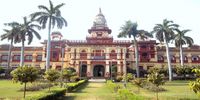
IIT BHU - Indian Institute of Technology
Varanasi, Uttar Pradesh4/10(2 Reviews)
Follow
![IIT Gandhinagar - Indian Institute of Technology - [IITG]](https://staticstage.collegedunia.com/public/college_data/images/appImage/25495_IITG_NEW.jpg?tr=h-100,w-200,c-force)
IIT Gandhinagar - Indian Institute of Technology - [IITG]
Gandhinagar, GujaratNo Ratings Found!!
Follow
![IIT Delhi - Indian Institute of Technology [IITD]](https://staticstage.collegedunia.com/public/college_data/images/appImage/25455_IITDelhi_New.jpg?tr=h-100,w-200,c-force)
IIT Delhi - Indian Institute of Technology [IITD]
New Delhi, Delhi NCR4.3/10(10 Reviews)
Follow
![IIT Guwahati - Indian Institute of Technology - [IITG]](https://staticstage.collegedunia.com/public/college_data/images/appImage/1620192479desk.png?tr=h-100,w-200,c-force)
IIT Guwahati - Indian Institute of Technology - [IITG]
Guwahati, Assam2.8/10(3 Reviews)
Follow
![Indian Institute of Information Technology - [IIIT]](https://staticstage.collegedunia.com/public/college_data/images/appImage/15076988081443263466IIITANew.jpg?tr=h-100,w-200,c-force)
Indian Institute of Information Technology - [IIIT]
Allahabad, Uttar Pradesh4.6/10(2 Reviews)
Follow

4.1/10(3 Reviews)
Follow

3.2/10(2 Reviews)
Follow

4.6/10(1 Reviews)
Follow

3.2/10(16 Reviews)
Follow
![International Institute of Information Technology - [IIIT]](https://staticstage.collegedunia.com/public/college_data/images/appImage/25357_00.jpg?tr=h-100,w-200,c-force)
International Institute of Information Technology - [IIIT]
Hyderabad, Telangana4.7/10(3 Reviews)
Follow